Scarred Lion King: African Safari Wildlife Story & Male Lion Territorial Battles
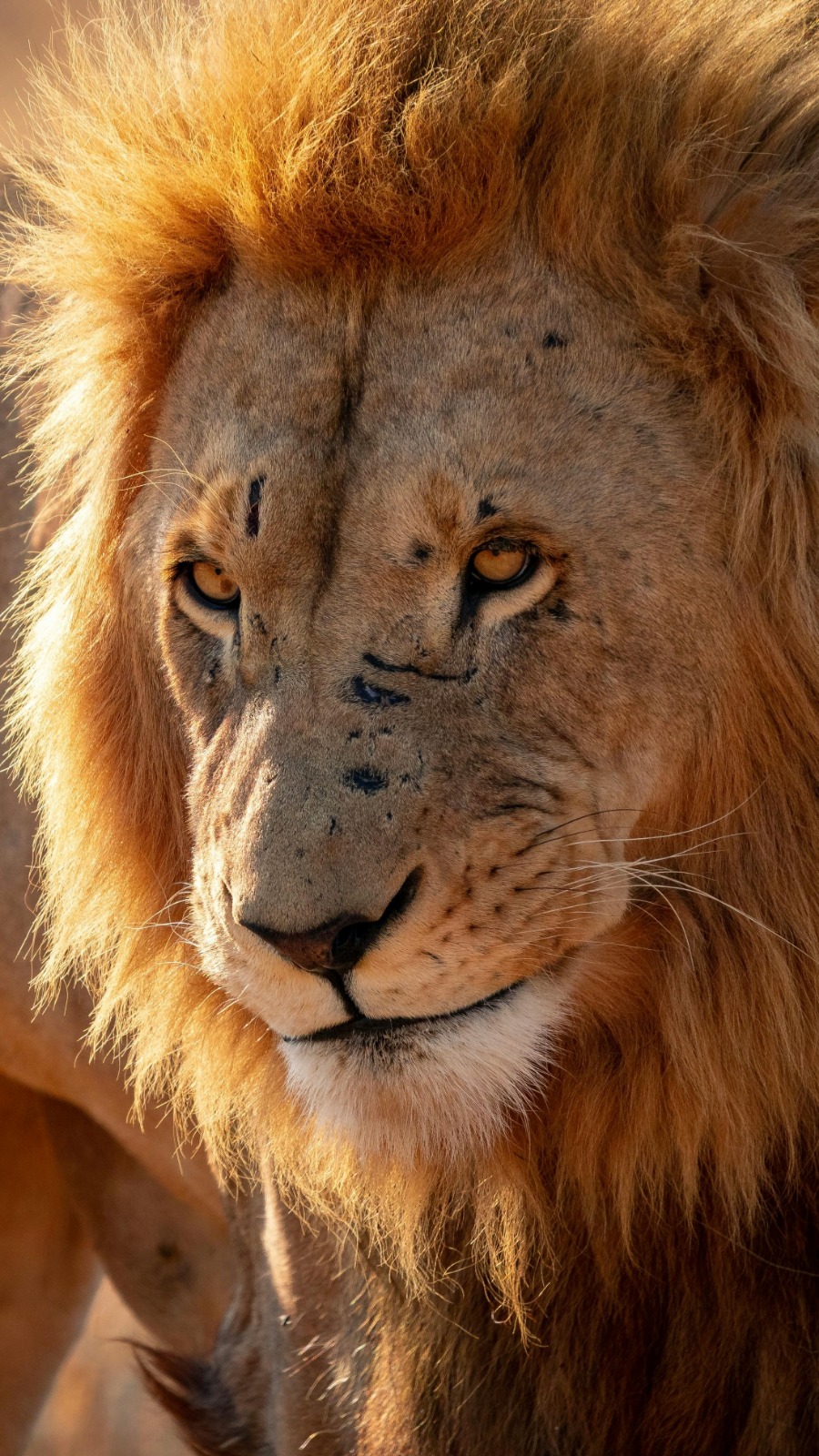
The morning sun cast long shadows across the savanna as the old lion emerged from the acacia thicket. His mane, once full and golden, now bore the silver of age and the gaps of countless battles. But it was his face that told the real story—three deep scars carved across his left eye, a torn ear, and a crooked fang that showed even when his mouth was closed.
These were not marks of defeat. They were badges of dominance, earned through years of defending his pride and territory against younger challengers who thought his time had passed.
## The Price of Kingdom
In the lion's world, territory is everything. A pride's domain can span up to 100 square miles, and every inch must be defended. When rival males approach—drawn by the scent of lionesses or the promise of an easier takeover—the resident king has two choices: flee or fight.
This lion had never fled.
Each scar represented a battle that could have ended differently. The deep gash above his eye came from a coalition of two brothers who had wandered from the north, seeking to claim his pride. The fight lasted hours, a brutal display of raw power and desperation. In the end, the brothers limped away, and he remained—bloodied but unbowed.
The torn ear was older, from his own youth when he and his brother first challenged for their territory. That battle taught him that survival wasn't about being the strongest—it was about refusing to surrender.
## More Than Just Wounds
Wildlife researchers who have tracked this lion for years say his scars serve a purpose beyond the physical reminder of past conflicts. They're a visual deterrent to younger males considering a challenge. One look at that battle-worn face tells a story: this is not a lion who gives up easily.
His pride has thrived under his protection. Cubs have grown to adulthood, and the hunting grounds remain secure. The scars that mark him as a warrior have allowed others to live in peace.
## The Inevitable Succession
Nature is unforgiving, and every king eventually falls. Already, scouts report young males testing the borders, watching from a distance, waiting for signs of weakness. The old lion knows this—you can see it in the way he patrols more frequently now, marking his territory with renewed urgency.
But for now, as he stands on the rocky outcrop surveying his kingdom, the scars catching the light, he remains what he has always been: a survivor, a protector, a testament to the brutal beauty of the wild.
His face tells a story that words cannot—of battles fought in the darkness, of blood spilled on sun-baked earth, of the terrible cost of being king.
And he wears each scar with the quiet dignity of one who has earned the right to rule.
Share This Story
