Lake Naivasha: The Rift Valley's Most Delightfully Confused Lake
Every family has that one relative who doesn't quite fit the mold. Loud at the wrong moments, oddly wonderful, impossible to categorize. The Kenyan Rift Valley has one too, and her name is Lake Naivasha.
Picture the Rift Valley lakes lined up like siblings at a reunion. Lake Magadi, crusted in soda ash, looking like it survived a chemistry experiment gone rogue. Lake Bogoria, simmering with hot springs and geysers, permanently on the verge of a tantrum. Lake Nakuru and Lake Elmenteita, alkaline and pink tinged, hosting flocks of flamingos who clearly did not get the family memo about subtlety. And then there is Naivasha. Cool, clear, freshwater Naivasha, sitting quietly among her volatile siblings like the one sane cousin at Christmas dinner who somehow ended up in charge of the car keys.
That is the first and most delicious irony about this lake. In a valley defined by tectonic drama, volcanic ash, and mineral heavy water that would make a fish reconsider its life choices, Naivasha decided to be fresh. Genuinely, drinkably fresh, fed by rivers rather than trapped runoff, and high enough in elevation that it escapes the punishing evaporation that turns its neighbors into salt pans. Nobody quite agrees on why she alone gets to break the rules, and honestly, the mystery only adds to the charm.
A Lake With a Disappearing Act
Naivasha has a flair for the theatrical. Over the last century she has expanded, shrunk, flooded farms, swallowed lodges, and receded so dramatically in the 1940s that local farmers reportedly grew crops on what used to be lakebed. She does not do "stable" the way other lakes do stable. She breathes in and out over decades like she is deciding, again and again, whether she actually wants to be a lake at all.
Scientists have chased theories for years, underground fissures, subterranean drainage into nearby Lake Elmenteita or beyond, seasonal rainfall swings, tectonic shifting beneath the valley floor. The honest answer is that nobody has fully pinned it down. Naivasha keeps her secrets the way any self respecting diva should, and every theory only makes visitors more curious to see her for themselves.
The Hippo Capital That Nobody Warned You About
If Naivasha has a personality, it is loud, wet, and roughly two tonnes. The lake holds one of the densest hippopotamus populations anywhere in Africa, with estimates regularly climbing into the thousands. These are not shy, distant hippos glimpsed through binoculars. These are hippos that graze on golf courses at night, wander past hotel verandas, and occasionally remind boat operators exactly who owns the water.
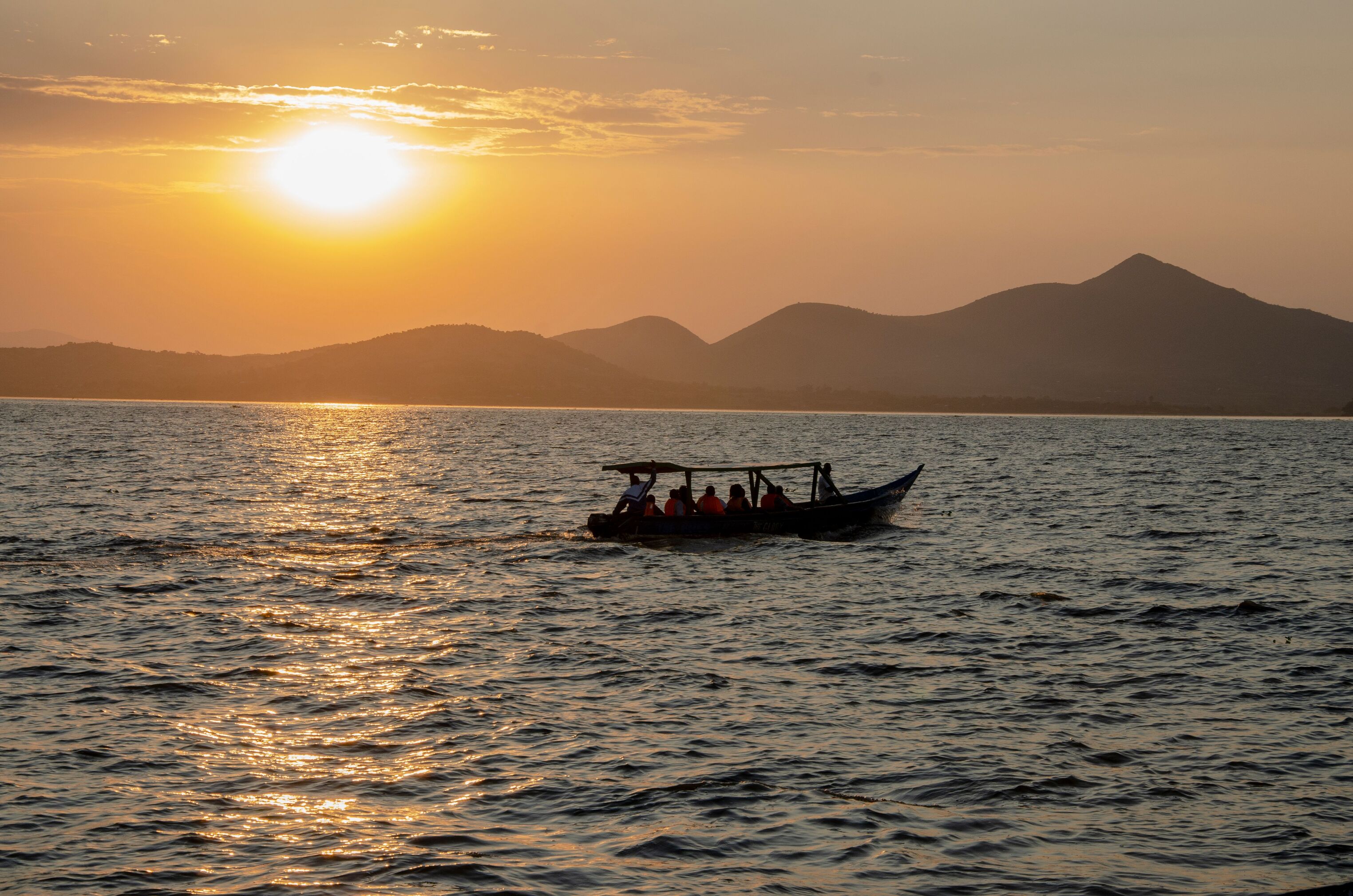
A sunset boat ride here is less a peaceful nature cruise and more a respectful negotiation with several hundred grumpy landlords who happen to live submerged. It is thrilling, a little terrifying, and completely unlike the tame wildlife encounters other lakes offer. You have not truly understood Kenyan wildlife etiquette until a hippo has yawned at your boat from twenty metres away and you have understood, instantly and instinctively, to give it more room.
Fever Trees, Fishermen, and a Very Famous Poster
Ring the shoreline and you will find groves of yellow barked acacia, the so called fever trees, standing in shallow water like they are posing for a painting nobody asked them to be in. Early European settlers, unaware that the trees had nothing to do with it, blamed them for the malaria outbreaks common near still water. The name stuck even after the science moved on, which feels appropriate for a lake that has never been particularly interested in correcting the record.
Beyond the trees, Naivasha is a working lake. Local fishing communities have drawn a living from her waters for generations, and flower farms ring her shores, supplying a significant share of Europe's cut roses. It is an odd juxtaposition, wild hippos and commercial greenhouses sharing a single ecosystem, but it captures something true about this lake. She is not a preserved museum piece. She is alive, used, and woven into daily Kenyan life in a way that few other safari destinations manage.
Crescent Island and the Walking Safari You Did Not Expect
Most safari experiences in Kenya keep you firmly inside a vehicle, for extremely good reasons involving teeth and claws. Naivasha flips that expectation with Crescent Island, a peninsula shaped like a comma where giraffes, zebras, waterbuck, and wildebeest roam without a single predator in sight. Visitors can walk among them on foot, which sounds almost too good to be true until you are standing three metres from a giraffe calmly chewing acacia leaves and utterly unbothered by your presence.
It is the closest thing Kenya offers to a safari without a windshield between you and the animals, and it exists because of a quirk of geography most first time visitors never anticipate.
Hell's Gate, Right Next Door
As if one improbable feature were not enough, Naivasha sits beside Hell's Gate National Park, a gorge of red cliffs, geothermal steam vents, and towering rock towers that reportedly inspired the landscapes of The Lion King. It is one of the only parks in Kenya where you can cycle or walk freely among zebra and buffalo, no vehicle required, no safety briefing longer than "stay on the path and do not annoy the buffalo."
Between the hippos on the water and the cyclists dodging wildlife on land, the area around Naivasha has quietly become one of the most active, hands on safari regions in the country.
Why Naivasha Deserves More Than a Drive By
Too many itineraries treat Lake Naivasha as a rest stop on the way to the Maasai Mara, a scenic blur glimpsed through a coach window. That does her a disservice. This is a lake that broke from the mineral heavy mold of her siblings, hosts one of Africa's densest hippo populations, floods and recedes on her own unpredictable schedule, and sits beside a national park you can explore on a bicycle. Few destinations anywhere pack that much ecological personality into one stop on a road trip.
So the next time an itinerary has you passing through the Rift Valley, give Naivasha more than a glance out the window. Spend a night. Take the boat ride. Walk among the giraffes on Crescent Island. Let the lake that refuses to follow the family rules show you exactly why she is worth the detour.
www.sublimesafaris.com
Share This Story
