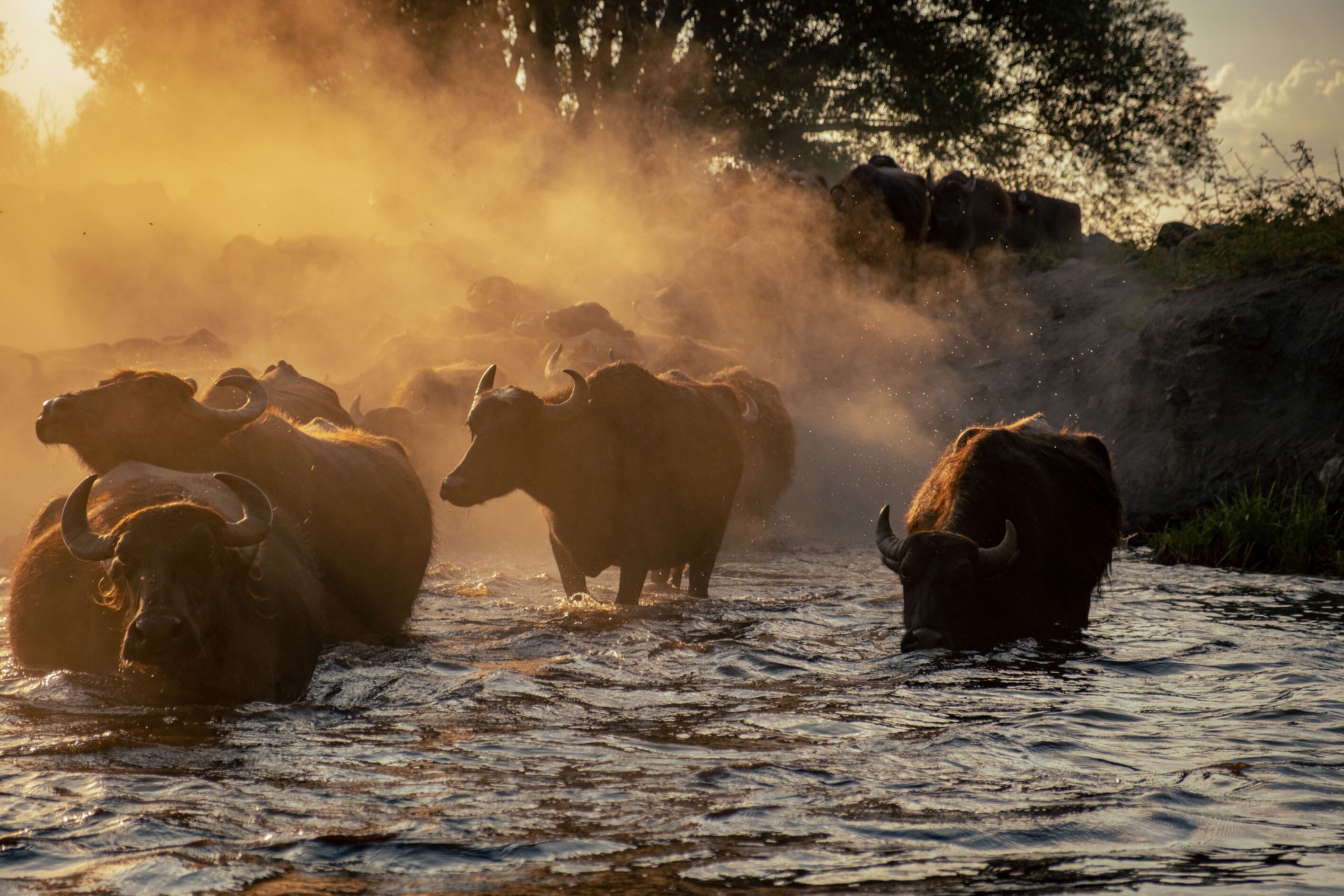
Buffalo Springs & Mt Ololokwe: The Northern Kenya Combo
Driving north of Kenya starts showing you a different face — drier, wilder, stranger, and considerably less crowded. Two places sit at the heart of that face: Buffalo Springs National Reserve in Isiolo and the sacred table mountain of Ololokwe in Samburu. Neither gets the Instagram traffic of the Mara. Both deserve it.
Here's everything you need to know before you go.
Buffalo Springs National Reserve: The Quiet Cousin of Samburu
Ask most safari-goers about "Samburu" and they picture Samburu National Reserve. Few realise it has a sibling right across the river, and that sibling is arguably the more peaceful of the two.
Where It Is and Why It Looks the Way It Does
Buffalo Springs National Reserve sits in Isiolo County in northern Kenya, just south of Samburu National Reserve, with the Ewaso Nyiro River forming the boundary between them and acting as the main permanent water source for the whole ecosystem. The reserve covers around 131 square kilometres and sits at an altitude between 850 and 1,230 metres above sea level.
The name comes from an oasis of clear water — the actual "Buffalo Springs" — found on the reserve's western end, fed by an underground stream tracing its origin back to Mount Kenya. The landscape is a rolling lowland plain shaped by ancient lava flows, with volcanic soils, doum palm bands, riverine forest along the water, and open grassland beyond.
Fun fact: Buffalo Springs was originally established in 1948 as part of the larger Samburu-Isiolo reserve, and only became its own distinct reserve when boundaries were redrawn in 1985.
What You'll Actually See
This is dry-country wildlife viewing, with a different cast than the Mara's. Expect Grant's gazelles, elands, the striped Grevy's zebra (rarer than its Burchell's cousin), gerenuk antelope with their long giraffe-like necks, Beisa oryx, reticulated giraffes, and both greater and lesser kudu. All three big cats are present — leopards favour the wooded riverbanks, lions stake out the riverine forest to ambush animals coming to drink. Elephants, hippos, buffaloes, hyenas and cheetahs round out the sightings, with nearly the full Big Five possible on a good day.
Best game-viewing hours: early morning or late afternoon, when nocturnal animals are emerging or heading back to shelter.
Getting There and When to Go
Buffalo Springs is roughly 355km from Nairobi — about 5 to 6 hours up the Thika Highway toward Isiolo Town, with Mount Kenya visible for much of the journey. Best months are the dry season: June–October and December–March. Rainy seasons run October/November (short rains) and February–May (long rains). Expect daytime temps of 20–30°C year-round.
Accommodation spans budget (Lion King Bush Camp) through midrange to luxury (Elephant Bedroom Camp, Larsen's Tented Camp, Sarova Shaba Game Lodge).
Sublime Travel tip: Because Buffalo Springs shares its ecosystem with Samburu and Shaba, one lodge stay often gives you game-drive access across all three reserves.
Mt Ololokwe: The Mountain the Samburu Call the House of God
About 90 minutes further north, near Archer's Post, a solid wall of rock rises out of nowhere.
The Mountain Itself
Mount Ololokwe — also known as Ol Donyo Sabache — sits within Samburu East's Namunyak Conservancy and reaches roughly 2,000 metres above sea level. Two smaller peaks flank the main massif, curling into a horseshoe-shaped valley called Sabache, named after the clasp on a Samburu woman's traditional necklace.
Culturally, this rock is central to Samburu identity — seen as the source of the water, plants, and grazing that has sustained families and livestock for generations. Thanks to its resident elephants, it's locally said to be a dwelling place of God. Visitors are traditionally asked to place a stone and give thanks at the summit's water source.
Climbing It
Not a stroll. The hike crosses rocky bushland into forest, gains roughly 1,000m in elevation, and is rated moderate difficulty. The trail follows old paths worn by elephant and cattle. Guided hikes typically start around 5am with an armed ranger and Samburu porters, with a breakfast stop around the halfway mark. Round trips run 3–6 hours depending on route and pace.
At the top: sweeping views of the Mathews Range and the Nkadoru Murto rock formations, with sunrise considered the best time to summit. The descent is faster but steep and slippery — care needed.
Sabache Camp at the base offers overnight stays plus cultural encounters with Samburu medicine men and warriors.
Getting There
Nanyuki and Meru are each about 1.5 hours from the mountain; Isiolo Town is just 45 minutes away. From Nairobi direct: north on the A2 through Isiolo, past Samburu National Reserve's entrance, then signs to Sabache Camp — roughly 5–6 hours total.
Pack water — daytime heat sits around 31°C, and there are no toilet or washing facilities at the summit.
Why Pair the Two on One Trip
Buffalo Springs gives you classic dry-country game drives. Ololokwe gives you a physical challenge, cultural depth, and a sunrise view over the whole ecosystem. Both sit within a couple of hours of each other on the same northern corridor — easy to combine into one circuit, with room to extend to Shaba, Laikipia, or Meru.
Ready to build this into your Kenya itinerary? Sublime Travel puts together private and small-group circuits through Isiolo and Samburu, timed to the dry season.
📧 sublimetravellimited@gmail.com
📞 +254110090711
🌐www.sublimesafaris.com
Share This Story
