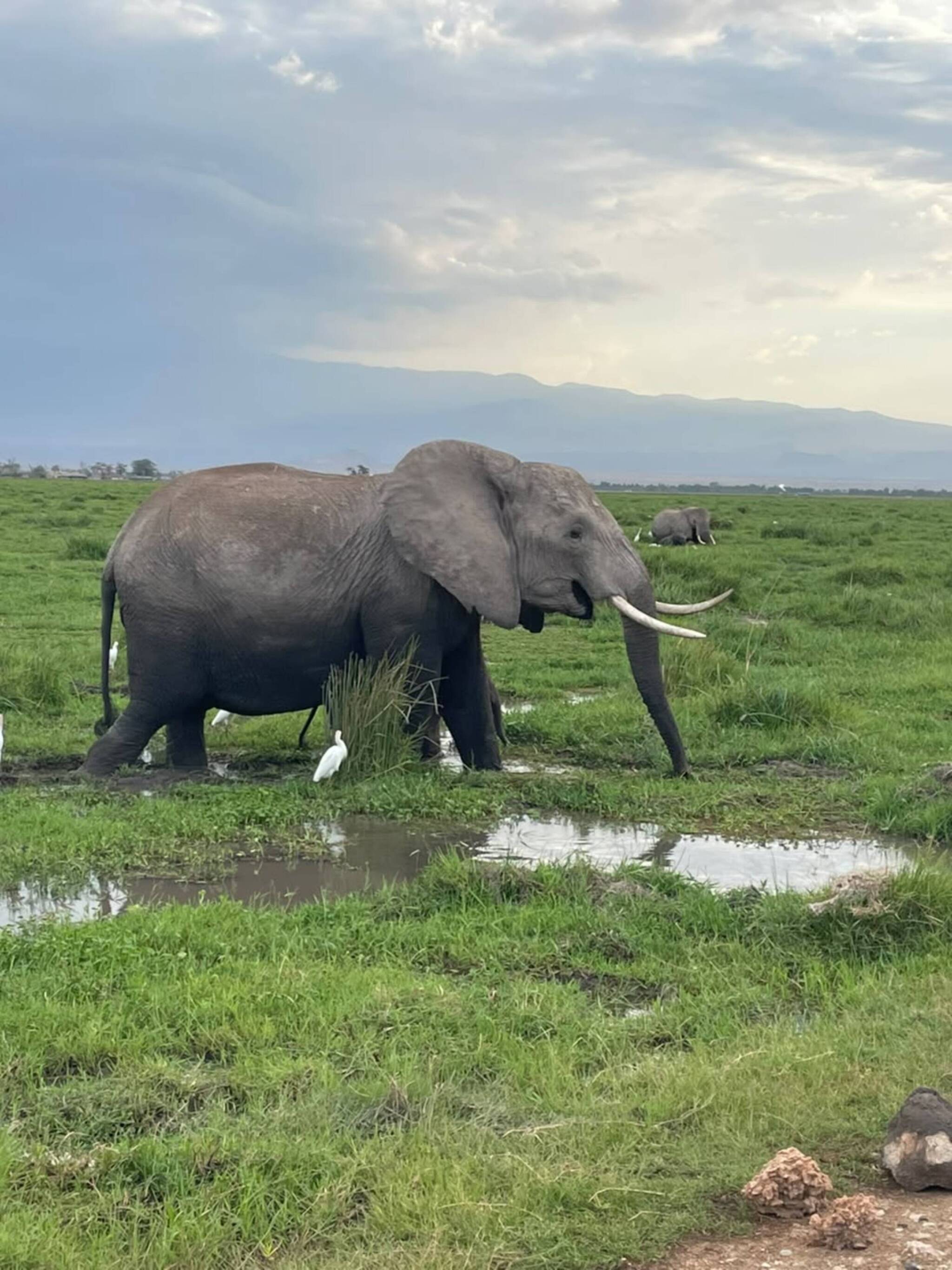
Amboseli National Park: Why Kenya’s Elephant Kingdom Is Like Nowhere Else on Earth
Let us be honest. Every safari park in Africa claims to be “unique.” The Mara says it. Samburu says it. Even that one suspiciously quiet waterhole behind your hotel says it.
But Amboseli National Park actually has the receipts.
It is the only place on the planet where a 6,000 kg elephant can stroll past you while Africa’s tallest mountain photobombs the entire scene. If a nature documentary and a postcard had a baby, it would be Amboseli. Here is why this compact, dusty, swampy, wonderfully weird park deserves a spot at the top of your Kenya bucket list.
1. The Kilimanjaro Backdrop That Ruins All Other Backdrops
Mount Kilimanjaro stands at 5,895 metres and is the highest mountain in Africa. Technically, it sits across the border in Tanzania. Practically, Amboseli has the best seat in the house.
On a clear morning, the mountain pulls back its cloud blanket and shows off its snowy summit above the plains. Elephants wander in the foreground, the sun climbs, and your camera roll suddenly looks like a magazine cover.
Pro tip from the safari guides: Kilimanjaro is a bit shy. Clouds usually cover it by mid morning, so set an early alarm. Your future self (and your Instagram followers) will thank you.
2. Elephants With Serious Personality
Amboseli is famous as one of the best places in Africa to see elephants up close. Here is the twist: they are remarkably relaxed around vehicles. These herds have lived alongside researchers and visitors for decades, so they stroll right past your Land Cruiser with the confidence of celebrities who have seen every paparazzo on Earth.
The park is also home to one of the longest running studies of wild elephants anywhere in the world, which began in the early 1970s. Scientists have followed generations of families, learning how elephants form lifelong bonds, mourn their dead and pass wisdom from grandmothers to grandcalves.
Amboseli is also known for its big tuskers, elephants with enormous ivory that sweeps close to the ground. Spotting one is a safari bragging right that never gets old.
Watch a herd long enough and you will see:
- Calves tripping over their own trunks (the comedy is free)
- Matriarchs leading the family with quiet authority
- Mud baths that look suspiciously like a spa day
- Teenage bulls trying to look tough and failing adorably
3. A Landscape That Plays Tricks on You
Amboseli looks like it cannot make up its mind, and that is exactly the charm.
The park is mostly dry and dusty. The name is often linked to a Maa word meaning “salty dust,” and you will understand why when a dust devil dances across the flat, pale plains. Yet in the middle of this semi arid land, lush green swamps appear like a mirage that decided to stay.
The secret is Kilimanjaro. Snowmelt from the mountain filters underground and resurfaces in the park’s swamps and springs. These permanent wetlands act as a lifeline, drawing elephants, buffalo, hippos and thousands of birds, even in the driest months.
4. Swamps, Plains and Woodlands in One Compact Park
For a park of roughly 392 square kilometres, Amboseli packs in a surprising variety of habitats:
- Open plains for sweeping views and easy wildlife spotting
- Swamps and wetlands for hippos, buffalo and waterbirds
- Acacia woodlands for giraffes and shy residents
- Dry lakebed for dust, drama and wildly good photography
Because the terrain is open and the park is manageable in size, wildlife viewing is generous. You spend less time hunting for animals and more time actually enjoying them.
5. Birdwatching That Might Turn You Into a Birder
You came for the elephants. You will leave knowing the difference between a pied kingfisher and a malachite kingfisher. Such is the power of Amboseli.
More than 400 bird species have been recorded here. The wetlands attract pelicans, herons, storks, egrets and a long list of waterbirds. Add raptors, colourful bee eaters and the dramatic crowned cranes, and you have a paradise for bird lovers.
6. More Than Elephants: The Wider Cast
Elephants hog the headlines, but the supporting cast is excellent:
- Lions, who nap professionally during the day
- Cheetahs, who use the open plains to full advantage
- Spotted hyenas, the park’s resident comedians
- Giraffes, zebras and wildebeest in healthy numbers
- Buffalo and hippos around the swamps
One note for the record: Amboseli does not have a resident population of rhinos, so you will not complete the Big Five here. What it offers instead is some of the most photogenic wildlife viewing in Kenya.
7. Maasai Culture at the Heart of the Experience
Amboseli sits within Maasai land, and the cultural connection is part of what makes it special. The Maasai people have lived alongside wildlife here for generations, and visiting a Maasai community offers a rare chance to learn about traditions, music, beadwork and the relationship between people and nature.
Choose a responsible visit that benefits the community directly. Ask your tour operator how your money reaches local families. The best cultural experiences feel like a conversation, not a performance.
8. Global Recognition That Backs the Hype
Amboseli is not just a pretty face. It was designated a UNESCO Biosphere Reserve in 1991 and recognised as a Ramsar wetland site of international importance, reflecting its ecological value. When the world’s conservation bodies take notice, you know the place is special.
When Is the Best Time to Visit Amboseli?
- June to October (long dry season): The most popular window. Animals gather around the swamps, the dust is dramatic and Kilimanjaro is often clearer.
- January to February (short dry season): Another excellent window with great wildlife viewing and fewer crowds.
- March to May and November (rainy periods): Greener scenery, fewer visitors and lower rates, though roads can be muddy and Kilimanjaro may play hide and seek.
How Long Should You Stay?
Two nights is the sweet spot for most travellers. It gives you several game drives at the best light, a relaxed Kilimanjaro sunrise and time to explore the wetlands. Amboseli also pairs beautifully with Tsavo West, Tsavo East or the Maasai Mara for a longer Kenya itinerary.
Getting There
Amboseli is in southern Kenya, near the Tanzania border. From Nairobi, you can reach the park by road in around four to five hours, or take a short scheduled or chartered flight. Many travellers combine a road journey one way with a flight back for the best of both worlds.
Frequently Asked Questions
Is Amboseli worth visiting?
Absolutely. The combination of large elephant herds, open plains and Kilimanjaro views is hard to match anywhere in Africa.
Can you see Kilimanjaro from Amboseli?
Yes, and the best views are usually early in the morning and late in the afternoon, when the clouds clear.
Is Amboseli good for photography?
It is one of the best parks in Kenya for photography, thanks to the open landscape, big elephants and the iconic mountain backdrop.
Is Amboseli suitable for families?
Yes. The compact size, easy wildlife viewing and relaxed pace make it a great choice for families and first time safari goers.
Final Thoughts
Amboseli is where Africa shows off. Elephants, snowcapped peaks, swamps in the middle of dust, and a living Maasai culture all share one stage. If you want a safari that feels both wild and cinematic, this is the park for you.
Ready to plan your Amboseli safari? Sublime Travel designs tailor made itineraries across Kenya.
www.sublimesafaris.com
Share This Story
